千方百计爱上你
1,500-year-old glazed pottery reveals Eurasian cultural exchanges in ancient northern China_我的网站

A |
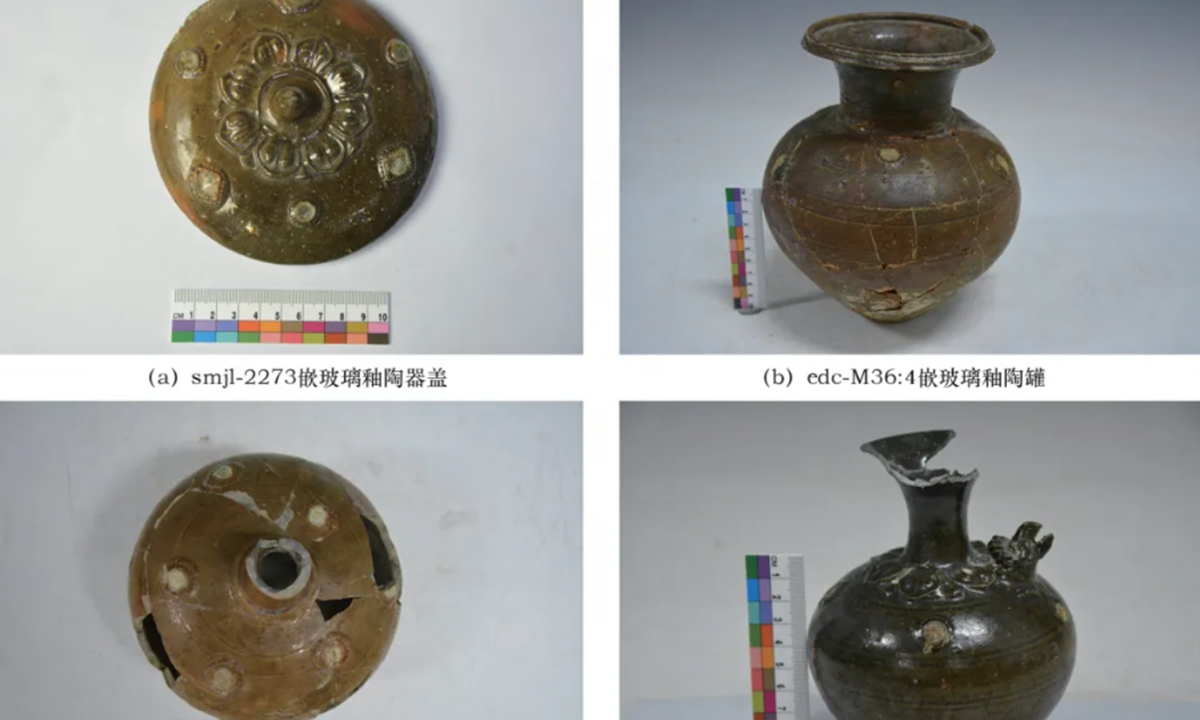
Samples of glazed pottery embedded with glass excavated from Northern Wei tombs in Pingcheng Photo: Courtesy of Shanxi Provincial Institute of ArchaeologyRare glass-inlaid glazed pottery artifacts unearthed from ancient tombs in Northwest China's Shanxi Province have provided new evidence of extensive cultural and trade exchanges between ancient China and other regions more than 1,500 years ago, according to a press release that the Shanxi Provincial Institute of Archaeology sent to the Global Times on Tuesday.
Systematic analysis conducted by the institute of pottery wares dating back to the Pingcheng period of the Northern Wei Dynasty (386-534) has identified distinct foreign cultural and technological elements embedded in the craftsmanship and material composition of the unique artifacts, shedding fresh light on ancient Eurasian cultural integration.
Established by the Tuoba Xianbei ethnic group, the Northern Wei Dynasty designated Pingcheng, present-day Datong city in Shanxi Province, as its capital from 398 to 494. For nearly a century, the city served as a pivotal multicultural hub where Xianbei nomadic culture, Central Plains Han culture and diverse Western Regions civilizations converged and interacted, according to a report on Chinanews.com.cn.
Archaeological excavations at multiple tomb clusters in Pingcheng, including the Dongxin Northern Wei cemetery and the Qilicun cemetery, have yielded a total of eight pieces of glass-inlaid glazed pottery. Though far fewer in number compared with common glazed pottery figurines and painted glazed wares, these artifacts feature an extremely rare inlay technique unseen elsewhere in the developmental history of Chinese ceramics, according to the press release.
Given the exceptional rarity and good preservation of the relics, researchers selected four representative pieces for comprehensive laboratory testing and material analysis. The results show that the glass inlays are primarily soda-alumina glass, most likely produced by remelting trade beads from the Indian Ocean and Pacific regions, a key commodity in ancient maritime and overland trade networks.
The findings confirm that Pingcheng maintained frequent cross-border trade and cultural communication during the Northern Wei era, with access to glass raw materials sourced from diverse overseas regions. The varied compositional characteristics of the inlaid glass provide crucial clues for studying ancient glass-making technologies, raw material circulation and long-distance trade routes in ancient East Asia, the press release noted.
Beyond material composition, the artifacts also embody prominent cross-cultural innovation in design. Their decorative motifs draw heavily on gem-encrusted gold and silver wares of the Sasanian Persian Empire, while integrating artistic elements from other Eurasian regions. The blended design styles reflect the era's prevailing trend of multicultural fusion and creative assimilation of foreign civilizations.
Archaeologists noted that the glass-inlaid glazed pottery represents an innovative technological achievement crafted by Northern Wei artisans who absorbed and refined foreign techniques and aesthetics. The distinctive craftsmanship and stylistic features of these wares exerted a far-reaching influence on ceramic production in surrounding regions and subsequent dynasties, marking a vital chapter in the evolution of ancient Chinese ceramic art.
The research underscores that ancient China's northern borderland was not an isolated cultural enclave, but an active node in Eurasian cultural and trade exchanges, where foreign elements were localized and innovated to form unique regional civilizational achievements, archaeologists from the Shanxi Provincial Institute of Archaeology said.
。 8月16日,在邢台市南和区大郝村的玉米地里,一株株玉米挺拔整齐,种粮大户韩坤杰使用植保无人机对玉米进行“一喷多促”作业。“一架无人机一天能喷五六百亩地,我这2000亩地,两架无人机两三天就能喷完,省时省工省力。”韩坤杰说,以往人工喷施农药、叶面肥,存在喷洒不均匀、作业效率低等难题。现在植保无人机搭载精准雾化喷洒系统,将杀虫杀菌剂、叶面营养调节剂均匀喷施在玉米植株上,一次性完成防病虫、防早衰、促灌浆多重作业,让玉米吃上了一顿“营养餐”。

B | 眼下,南和区的玉米进入了灌浆期,这是产量形成的重要时期,也是病虫害集中发生期。“一喷多促”是玉米稳产增产的关键技术,通过一次喷施实现防病虫、促灌浆、增粒重、提单产的多重效果。为防治病虫害、促进秋粮生长,当地农技人员深入田间地头,为农户传授玉米病虫害防治方法,讲解水肥一体化灌溉技术要点。“我们开展‘一喷多促’技术推广,确保玉米稳产增产措施有效落地,全力以赴夺取秋粮丰收。”邢台市南和区农业农村局农技推广研究员温春爽说,作为粮食生产的关键技术,“一喷多促”将病虫统防、增重促灌、抗逆防衰、壮秆抗倒等多重功效集于一次喷施。同时配合施用磷酸二氢钾与氨基酸叶面肥,可延长叶片光合功能期,促进作物生长,提升单产水平。秋粮产量占我省全年粮食总产量的六成以上,病虫害防治是实现粮食稳产增产的关键。我省持续推进“虫口夺粮”行动,开展秋粮病虫防治,加密病虫监测网点,常态化开展田间拉网式普查,及时发布病虫预警信息。紧盯玉米螟、南方锈病等病虫害防控关键窗口期,各地大力发展统防统治、绿色防控,严防重大病虫害区域性暴发流行。作为传统农业大县,武邑县今年整合12家规模化飞防组织,投入专业植保无人机120余架,并依据乡镇耕地规模与服务半径,搭建起“县级统筹+村级对接+组织作业”的一体化植保网络,全面推进“一喷多促”统防统治作业。田管跟得上,丰收有底气。我省以“提单产、保丰收”为目标,把夏播玉米作为主攻方向,组织专家制定夏玉米肥水管理、病虫害防控技术方案。聚焦34个玉米、2个大豆整建制推进县和邯郸市整建制推进市、14个玉米单产提升工程县,打造一批千亩方、万亩片,树立高产典型。同时,省组织省级产业体系专家、农技人员进村入户,开展蹲点包片指导,重点落实科学肥水调控、病虫害防治等措施,持续挖掘单产潜力。

C | 用好中央资金和省级玉米“一喷多促”专项经费,落实“一县一策”,推动高产技术直达田间地头。(日报记者 郝东伟)。
Current article:http://12jo4ih.zhenzongtingrangunhongqiusao.shop/7ql/20260826/4166.html
Published on:10:06:20